
Kitchen Guides
Vacuum Sealer: What It Actually Saves, and Where It Does Not Pay
Nov
Disclosure: this site earns a commission from qualifying purchases made through the links below, at no extra cost to you.
A vacuum sealer is sold as a freshness machine. It is really a freezer machine, and only for food you were going to freeze anyway. Read the claims that way and the buying decision gets much smaller: this is a tool for portioning and for time, not for keeping a tomato alive an extra week. It also has one honest failure mode, which is wet food and a dirty bag lip, and we will get to that before you spend anything.
What the bag changes, and what it does not
Freezer burn is water leaving the surface of the food and refreezing elsewhere. In a zip bag with a pocket of air around the contents, that surface keeps drying for as long as it sits there. Take the air gap away and the drying slows to almost nothing, so the texture of the thing you thaw in March is closer to the thing you froze in November. That is the entire trick. It is real, and it is worth money if you freeze in bulk.
What it does not do is sterilise anything. Clostridium botulinum is an anaerobic organism: it is the one class of bug that a vacuum makes happier, not sadder. That is why the rule for sealed food is the same rule as for any other food — fridge or freezer, never a warm cupboard. Moist, low-acid items (garlic in oil, soft cheese, cooked rice, stock) belong in the cold chain no matter how good the seal is. None of that is a reason to avoid a sealer; it is a reason not to treat one as a canning jar.
Four cases where it genuinely pays back
1. Bulk protein, split before freezing. This is the one that pays for the machine. A family pack of chicken or a large cut bought on offer gets divided into meal-sized portions the day it comes home, frozen flat, and thawed one at a time. Without the sealer most people freeze the whole pack, thaw it all, cook it all, and eat the same thing four nights running. The saving is less about the bag and more about the portions it forces you to make.
2. Batch cooking, in bricks. Chilli, ragu, curry and beans go into portions, get pressed flat, and stack in the freezer like books. Flat freezes faster than a tub and thaws faster too, which matters if dinner is decided at seven in the evening.
3. Produce that freezes well. Berries, blanched green vegetables, and fruit for smoothies are all better sealed than bagged. Herbs are the exception: chopped into oil or water in an ice-cube tray first, then bagged, because a sealed bag of dry leaves just becomes dust.
4. Anything going past about eight weeks. Under two months, a decent zip bag with the air pressed out is close enough that most people cannot tell. Past two months, the difference starts to show, and that is when the machine stops being a gadget.
Four cases where it does not
1. Food you will eat in three days. A fridge container is faster to open, faster to close, and you can put it in a dishwasher.
2. Soup, stock, and anything wet. A pump pulls liquid into the seal bar and you get a weak weld with broth in it. Freeze the liquid in a tray or a tub first, then seal the solid block, or use a rigid container and skip the machine entirely.
3. Soft baked goods. Bread, cake and anything with a crust get crushed flat. A bag and a clip do the job without the vacuum.
4. Marinades. Vacuum marinating is real, but a bowl with a lid in the fridge for an hour gets you most of the way there, and you do not have to clean the machine afterwards.
The bag math is the whole economics
The machine is a one-off cost; the bags are the subscription. Three formats exist and they are not interchangeable in running cost: pre-cut bags (fastest, most expensive per litre sealed), rolls that you cut and seal on both ends (cheapest per seal, one extra step, needs a machine with a built-in roll cutter and a wide enough channel), and reusable containers or zip bags for the things that do not need vacuum at all. If you will not buy rolls, a “custom length” feature is a setting you paid for and never use.
Seal failures are almost always user error, and almost always moisture. Wipe the inside lip of the bag dry, leave a few centimetres of headspace above the food, and double-seal anything that came out of a marinade. A bag that will not hold vacuum is usually a bag with a wet seam, not a broken pump.
The order to buy it in
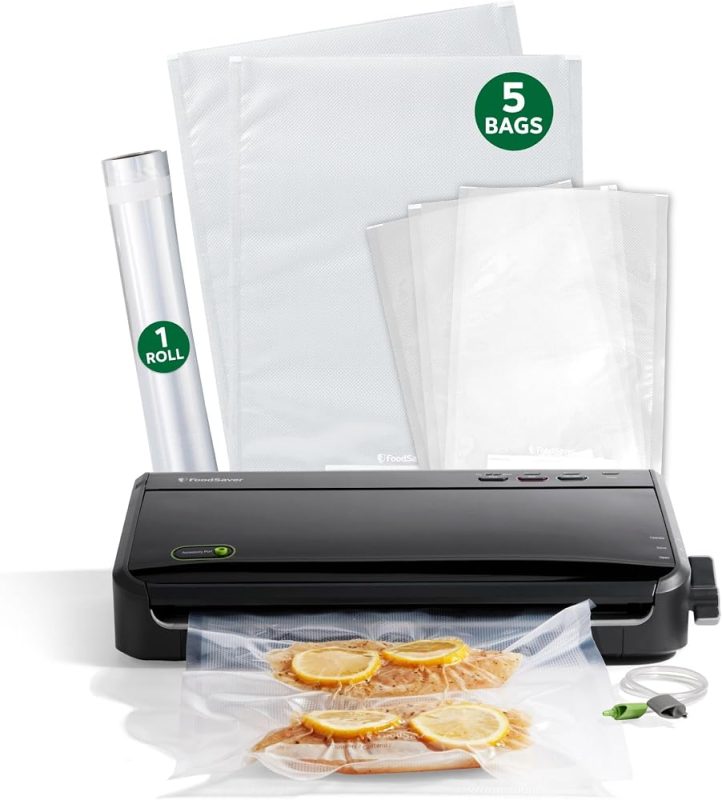
Start with the machine itself, and choose it on the channel width and whether it takes rolls, not on the suction number in the listing. Our own listing is Vacuum Sealer Machine with Bags.
Then buy the supply in the same width class, because a roll that is too wide for the channel is a roll you cut by hand every time. The custom-length rolls are FoodSaver Custom Length Vacuum Sealer Bags Multipack, 5 Count Rolls for Airtight Food Storage and Sous Vide – Compatible with FoodSaver, 8 (2 Pack) and 11 (3 Pack), and they are the cheapest way to seal odd-sized portions.
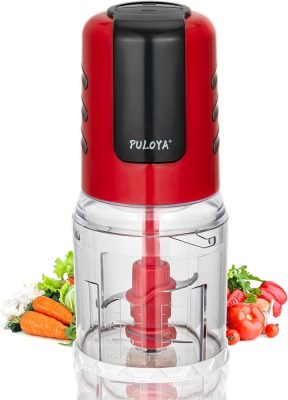
Only then the prep tool, and only if you portion sauces, pastes or smoothie bases. A small two-cup processor is enough for that and takes less counter space than the sealer: Mini Electric Food Processor (2 Cup).
The dry pantry is a different problem with a different answer. Flour, rice, coffee and cereals want a rigid airtight container, not a vacuum bag, and our guide to what keeps a pantry actually airtight covers that side. If you have not yet decided which counter appliances are worth a plug at all, read the order to buy counter appliances in first, and for the air fryer question specifically, 6 quart or 8 quart.
A five-meal test before you buy one
Portion five meals into ordinary zip bags, press the air out by lowering the bag into a bowl of water until only the seal is above the surface, then close it. Freeze flat, and note how many of the five you actually eat within two months. If the answer is four or five, the machine will save you money in portions and freezer burn. If it is two, the problem is meal planning, and a sealer will not fix it — it will just preserve the food you were not going to eat.
That is the honest version of the pitch: buy it for the portions, keep it for the freezer, and never use it on anything you would have eaten this week anyway.
Where to buy
Everything referenced above is listed in our store — we only link to products we would recommend at the stated use:
Disclosure: this site earns a commission from qualifying purchases made through the links below, at no extra cost to you.
Products in this guide
The exact items referenced above. As an Amazon Associate we earn from qualifying purchases — details.
n
More buying guides
Products we would check first
Picked for this topic. Live price and availability are on the Amazon page — confirm there before you buy.
