
Kitchen Guides
The Counter Appliance Order: What Earns a Plug, and What Earns a Drawer
Nov
Disclosure: this site earns a commission from qualifying purchases made through the links in this guide, at no extra cost to you. See our affiliate disclosure.
Small appliances are the only purchase in a kitchen that costs you space as well as money. A blender that lives in a cupboard gets used twice a year. The same blender, sitting on the counter with its lid on, gets used three times a week. That difference is not about the machine. It is about whether the machine has somewhere to live.
We sell everything below, so read this as an order to buy in rather than a list of things to own. The test is narrow on purpose: an appliance earns a permanent plug only if you would reach for it more than once a week and can pick it up with one hand. Everything else has to justify a drawer, and drawers run out too.
Count slots before you buy anything
Walk into your kitchen and count the outlets you can reach without moving something out of the way. Most kitchens have four usable counter outlets and two of them are already taken by a kettle, a toaster or a charger. That leaves two plugs, not six appliances. Every decision below is about which two, and the second rule is one appliance per job: if two machines do the same thing, you own one machine and one storage problem.
One blender, sized to who you actually feed
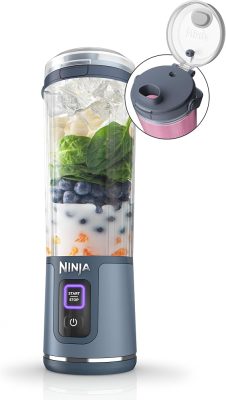
A cup blender blends in the cup you drink from, which removes the step that makes people stop using blenders – washing a jar and a base separately. Set the cup on the base, blend, drink, rinse the cup. That is the whole cycle, and it is why this format survives on a counter while bigger machines migrate to the cupboard.
Our personal blender is that machine – the portable-cup blender we stock. The caveat is worth being blunt about: a cup blender is for one serving at a time. If you routinely blend for two or more people, or you crush ice most mornings, the cup format is the wrong tool and a jar blender is the right one. Buying a cup blender to serve a family is how people end up owning both.
The two-cup processor is the quiet workhorse
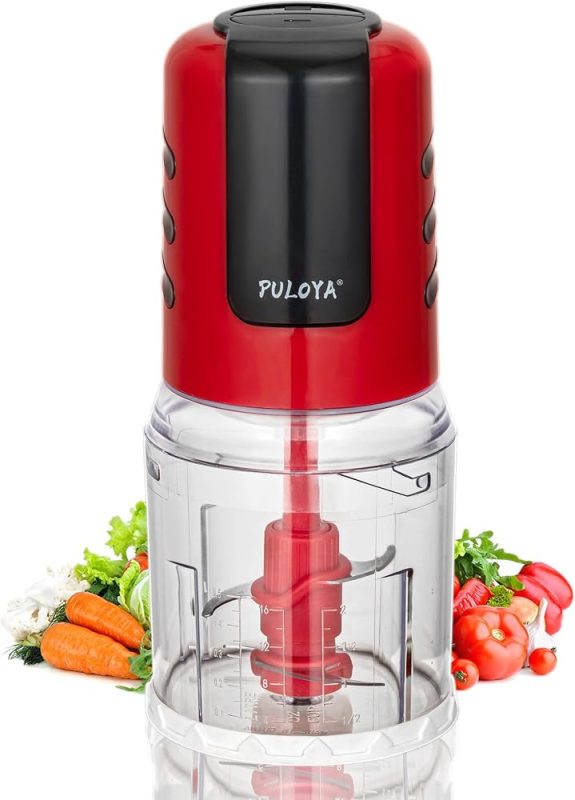
Garlic, ginger, herbs, breadcrumbs, one onion, a small batch of pesto, hummus for two. None of that needs a full-size processor, and a full-size processor is a commitment to washing a bowl the size of a sink to mince four cloves. A two-cup bowl fits in the dishwasher door and lives in a drawer without a fight.
Ours is the two-cup mini food processor. Two honest limits: it is not a dough machine, so do not load stiff bread dough into it, and it works by pulsing. Holding the button down turns herbs into paste and paste into grey water. Short pulses with a scrape down between them is the technique.
The hand mixer belongs in a drawer, and the case is the reason
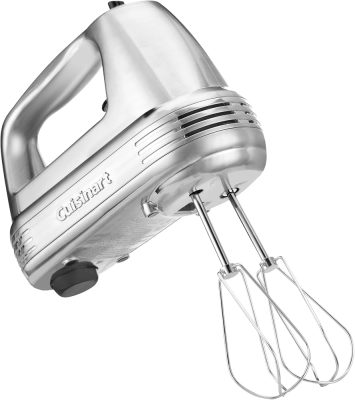
A hand mixer with loose beaters is four objects that never stay together. A hand mixer with a case is one object that can be picked up and put away with the same hand. That sounds trivial until you have owned the version where the dough hooks live in a different drawer from the beaters.
The mixer we carry comes with its storage case. It handles cake batter, frosting, whipped cream and mashed potatoes, which is most of what a home kitchen asks. It is not a stand mixer: stiff cookie dough will stall a hand mixer, and no amount of technique fixes that. If you bake bread weekly, a hand mixer is not the tool.
The kettle question is about one habit
Temperature control matters for exactly one kind of drinker: the person brewing pour-over coffee or green tea, where water just off the boil tastes different from water at a rolling boil. For instant coffee, black tea or a French press, a plain kettle heats water and that is the end of it.
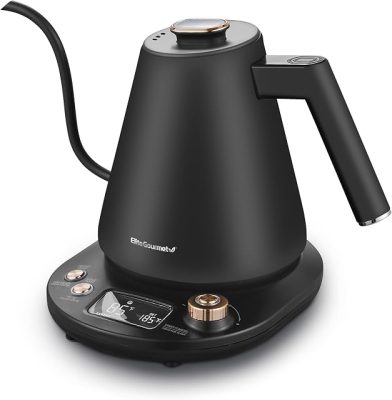
Our gooseneck kettle with temperature settings is a pour-over tool first. The narrow spout pours slowly by design – that control is the point when you are wetting a coffee bed, and it is mildly annoying when you are filling a teapot. If you do not brew pour-over, skip this and keep your current kettle; the counter slot is better spent elsewhere.
The frother is a drawer item that upgrades a habit for very little
A battery frother does not heat anything. It whisks hot milk for about fifteen seconds and gives you foam, which is the difference between coffee at home and coffee you would pay for. It is drawer-sized, it takes two AA batteries, and it costs less than a single week of cafe drinks.
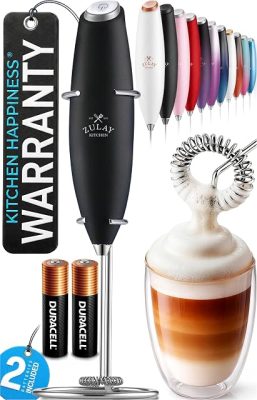
The handheld frother we stock is that tool. One honest limit: it produces foam, not microfoam. If you want latte art, this is not the route – that needs a steam wand, and a steam wand means an espresso machine, and an espresso machine means a counter slot and a cleaning ritual. Buy the frother if you want decent coffee; skip it if you want a hobby.
Pick one hot surface, not two
A panini press and an air fryer both answer the same question – hot, fast, crisp, without heating the oven for one portion. Owning both is how a counter disappears and how two machines each get used twice a month instead of one getting used twice a week.
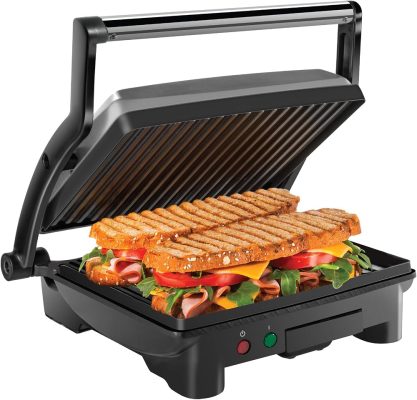
If pressed sandwiches are a weekly habit and the press does something the fryer cannot, which is press, then the non-stick panini press is the right single purchase. If what you actually do is reheat, roast vegetables and crisp things that were frozen, the fryer wins and the press is the wrong buy. Our air fryer sizing guide covers that decision properly: 6 qt vs 8 qt, single basket vs dual zone.
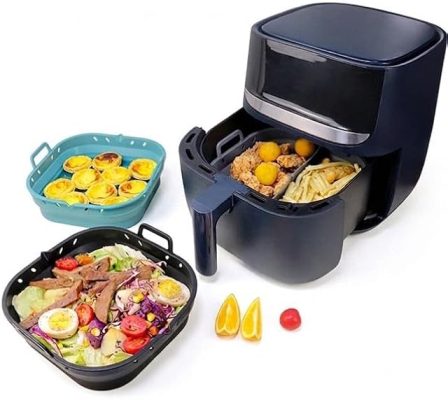
Accessories do not get slots. Silicone air fryer liners only make sense if you already own a fryer, and they are a cleaning shortcut rather than a purchase that improves cooking. If you do not own the fryer yet, buy the fryer first.
The vacuum sealer is a freezer tool, not a pantry tool
This is the appliance people buy for the wrong reason. It does not keep cereal crisp and it does not preserve dry goods; jars do that better and cheaper, as our airtight pantry container guide explains. What a sealer actually does is remove air from portions you have already decided to freeze, which prevents freezer burn and lets a bulk buy become eight dinners instead of one grey block.
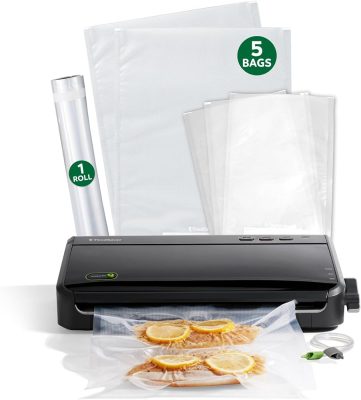
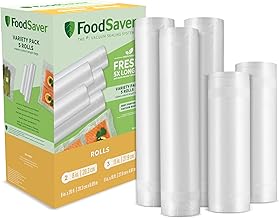
Ours is the vacuum sealer with starter bags, and the bags are the honest part: they are a consumable, roughly one per portion, so the machine only pays for itself if you already buy meat or produce in bulk and already freeze in portions. Replacement roll bags are available separately when the starter set runs out. If you do not portion before freezing, a zip bag does the same job for less money and no counter slot.
What to leave on the shelf
Anything with a single narrow job you would do twice a year – the hot dog toaster, the quesadilla maker, the electric egg boiler. Anything that needs a proprietary consumable you cannot buy locally. And anything you are buying for the kitchen you intend to have rather than the kitchen you cook in.
The rule that saves the most money is the thirty-day test: keep the box, use the appliance three times in the first month in the exact way you planned to use it, and if it has not earned its slot by then, return it while returns are still open. Most unused appliances were never wrong machines. They were machines bought for a habit that did not exist yet.
The order, if you are starting from nothing
Blender first if you drink smoothies, processor first if you cook more than you drink. Hand mixer only if you bake. A kettle matched to your actual coffee habit rather than the one you aspire to. One hot surface, chosen by what you cook most. A vacuum sealer last, and only once the freezer is already organised in portions.
Two things worth owning that do not compete for a plug: an instant-read thermometer, which improves every piece of meat you cook, and a clear idea of what free shipping is actually worth when you compare listings – our guide to judging a kitchen listing covers that.
Disclosure: this site earns a commission from qualifying purchases made through the links in this guide, at no extra cost to you. See our affiliate disclosure.
Products in this guide
The exact items referenced above. As an Amazon Associate we earn from qualifying purchases — details.
n
More buying guides
Products we would check first
Picked for this topic. Live price and availability are on the Amazon page — confirm there before you buy.
