
Kitchen Guides
Airtight Pantry Containers: What Actually Keeps Cereal Crisp (and Moths Out)
Nov
Disclosure: this site earns a commission from qualifying purchases made through the links below, at no extra cost to you. See our affiliate disclosure.
Walk into any kitchen with a stale-cereal problem and you usually find the same thing: a shelf of containers, half of them holding flour that has gone hard as a brick. The containers are not the issue. The seal is, and most sets sold in a 24-piece bundle cut the seal to hit a price point.
The three ways a pantry container fails
1. The gasket. A silicone ring under the lid is the only thing between your flour and room humidity. Cheap sets use a thin ring that goes flat in months, or no ring at all and rely on a friction-fit lid. Friction-fit is fine for a week of crackers and useless for a six-month bag of flour.
2. The hinge or clamp. Four-sided clamp lids put even pressure on the gasket. Single-hinge lids flex and leak at the far edge. If you buy clamp lids, check the flaps are thick enough not to crack in the dishwasher.
3. Volume mismatch. A container that holds exactly one bag of flour has no head space, so the lid pushes product into the gasket every time you close it. Leave about an inch of air above the fill line.
Measure your shelf before you measure your food
The most common regret after buying a set is height. Standard upper cabinets give about 11 inches of clear interior; base cabinets nearer 14. Add the lid and the food and you are at the limit of a tall cereal container. Write down three numbers per shelf – height, depth, and how far the door swings – then buy containers that fit two of those with room to spare. A set that fits your shelf beats a set with better gaskets that ends up living on the counter.
Where moths come from (it is not the container)
Pantry moths arrive in the flour, the birdseed or the pet food, already inside the bag. An airtight container stops them spreading across the shelf; it does not kill what is in the bag. Two steps do:
- Freeze new dry goods for 48 hours before they go into the pantry – that kills eggs and larvae at every stage.
- Wipe the shelf with vinegar after a sighting; the residue discourages re-laying and is safe around food.
If you already have webbing in the cabinet corners, containers are the last step, not the first. Empty, vacuum, wipe, then refill.
What we would buy
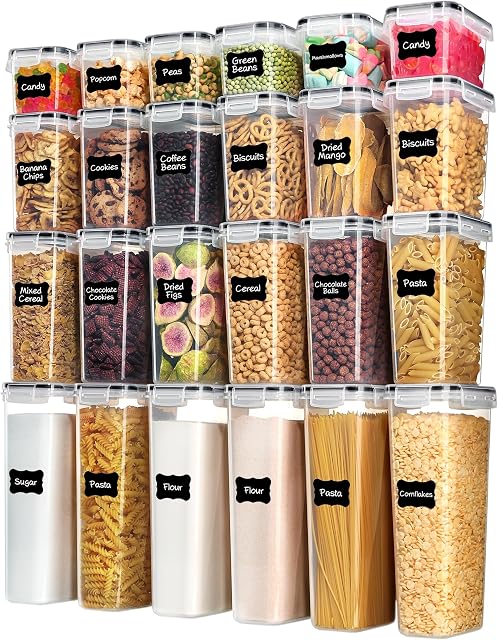
Our pick for a first set is the Airtight Food Storage Container Set – 24 pieces, silicone-gasket lids, and a size spread that covers cereal, pasta, flour and coffee without a second trip to the store. The gasket is replaceable and the lids are four-flap clamp rather than a single hinge.
Two honest caveats. Twenty-four pieces is more than most kitchens can use at once – measure first, and expect four or five to end up in the garage. And these are for dry goods: the seal is not rated for liquids, so do not use them for soup or stock.
If you are already decanting, the same container set on Amazon is usually the cheapest place to buy it, and a refillable oil sprayer is the other half of the job – one bottle you refill beats six aerosol cans that quit at 80% empty.
FAQ
Does airtight keep coffee fresh? It slows staling, but the win is freezing beans in a sealed bag and grinding from frozen. A pantry container is fine for a two-week supply, not a two-month one.
Dishwasher safe? Bodies yes, gaskets usually no – hot water and detergent dry silicone out. Hand-wash the rings and replace them when they go chalky.
Stackable? Only with flat lids. The clamp-lid style stacks two high reliably; round pop-top containers do not stack at all.
Are they BPA free? The set we link is, but the better question is whether the seal still works after a year. That is the failure that costs you money.
Where to buy
Everything referenced above is listed in our store — we only link to products we would recommend at the stated use:
Disclosure: this site earns a commission from qualifying purchases made through the links below, at no extra cost to you. See our affiliate disclosure.
More buying guides
