
Cleaning Guides
Why 24 Microfiber Cloths Beat a 3-Pack (and Where Cheap Ones Fail)
Nov
Disclosure: this site earns a commission from qualifying purchases made through the links below, at no extra cost to you. See our affiliate disclosure.
Microfiber is not a fabric, it is a geometry trick: split fibres about 1/100th the width of a human hair, small enough to grab grease and dust instead of pushing it around. That same geometry is why cheap cloths stop working – once the fibres mat down or pick up fabric softener, they are just a small towel.
The reuse problem a 3-pack creates
Count the surfaces in a normal flat: kitchen counters, hob, sink, bathroom sink, shower, toilet exterior, two mirrors, three tables, and the inside of the car windows once a month. A 3-pack means one cloth does four jobs before it hits the wash, so hob grease ends up on the bathroom mirror. That is not laziness, it is arithmetic.
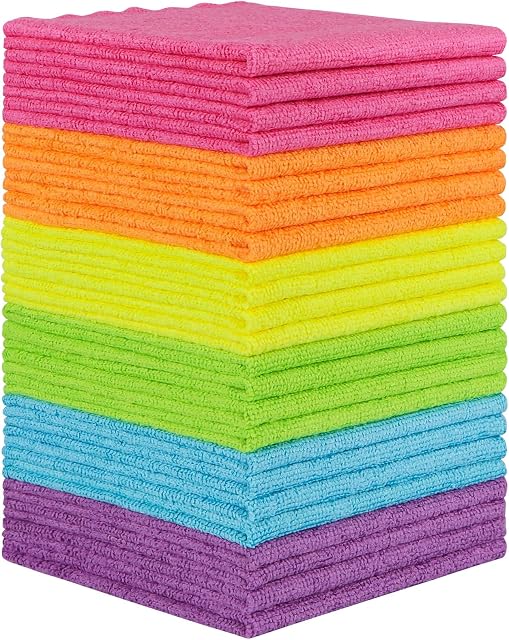
Twenty-four cloths at one per room per week gives two weeks between laundry loads. The Microfiber Cleaning Cloths (24 Pack) 24-pack is the cheapest way to get there, and colour-coding is the other half: one colour for kitchen, one for bathroom, one for glass, one for the car. Nobody has to remember which cloth touched the toilet.
What separates a good cloth from a bad one
- Weight (GSM). Under 250 gsm feels thin and wrings out badly. 300-350 gsm is the sweet spot for household work.
- Edges. Overlocked edges survive 50 washes; cut edges fray and shed lint on glass.
- No softener, ever. Fabric softener coats the fibres and permanently kills absorbency. Wash warm, tumble low, no sheets.
Where a duster beats a cloth
High surfaces, blinds and the tops of cupboards collect dust that a cloth drags into the air. An extendable microfiber duster holds it. The Extendable Microfiber Duster (Washable) reaches ceiling fans and the top of a wardrobe without a step ladder, and the head is washable – the only feature that matters, because a feather duster is a device for moving dust from one shelf to another.
For grout or a curved tub, a cloth is the wrong tool and a rotating brush is the right one. Our spin scrubber guide covers when that is worth buying; the short version is grout lines and tub curves, not floors.
What it costs
At the prices we measured in November 2026: 24 cloths $19.99 and the extendable duster $16.99. A household using two rolls of paper towel a week spends roughly $80-100 a year on towels that go straight in the bin. The cloths pay for themselves in about three months and do a better job on glass, because they leave no paper fibres.
Current pricing: the 24-pack on Amazon and the extendable duster on Amazon.
FAQ
Hot or cold wash? Warm, up to 60°C, no bleach and no softener. Hot water is fine for the fibres; the softener is what kills them.
How long do they last? 50-100 washes if you skip softener and the high dryer. When a cloth stops absorbing a spill and starts pushing it, retire it to garage duty.
Why do my windows streak? Usually too much water and no dry buff. Damp cloth to clean, separate dry cloth to buff, work in small squares.
Do they scratch screens? A clean microfiber cloth does not. A cloth with grit in it will – another argument for owning enough to always use a clean one.
Where to buy
Everything referenced above is listed in our store — we only link to products we would recommend at the stated use:
Disclosure: this site earns a commission from qualifying purchases made through the links below, at no extra cost to you. See our affiliate disclosure.
More buying guides
