
Beauty Guides
Ice Roller or Gua Sha: What Each One Actually Does for a Puffy Face
Disclosure: this site earns a commission from qualifying purchases made through the links below, at no extra cost to you.
An ice roller and a gua sha stone are sold as the same product with different shapes, and they are not. One removes heat. The other applies directed pressure. Everything that follows comes from that difference, including which one is a waste of money for the face you actually have.
What cold does, and where it stops
Cold narrows the surface blood vessels and slows the tissue underneath, which is why a face looks tighter and less flushed for twenty to forty minutes after something cold touches it. That window is real. It is also temporary: nothing about cold changes the structure of your face, and nothing about it lasts past the afternoon.
What cold is genuinely good for: the morning after a salty dinner, a flushed face after a hot commute, a face that feels hot and puffy at the same time, and the minutes before makeup when you want the skin flatter rather than plumper. What cold is bad for: skin that is already sensitive, anything with broken capillaries across the cheeks, and anyone who holds a frozen tool on one spot for two minutes and calls it a treatment.
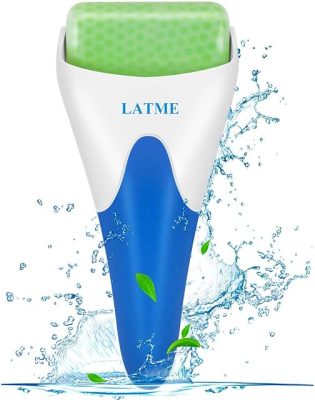
The form matters less than the temperature and the glide. A roller from the freezer is colder than most gel tools from the fridge, and a tool that is too cold is worse than a cool one because you stop moving it. The ice roller in this guide is the cheap version of the idea: a steel or gel head on a handle, kept in the freezer, rolled in straight passes rather than scrubbed in circles.
What a gua sha stone actually does
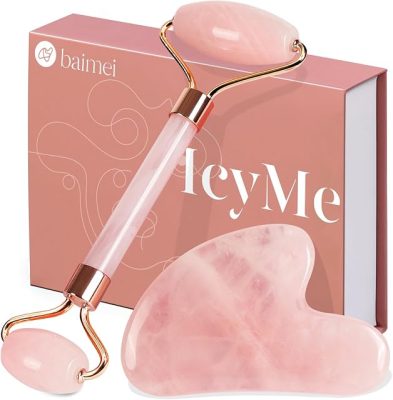
A stone does two things cold cannot. It applies pressure along a direction, and it works on the tissue at the edge of the face where fluid sits: along the jaw, under the cheekbone, down the side of the neck. That is why a gua sha routine feels like drainage and an ice roller feels like air conditioning. The stone is not magic and the direction is not secret: short strokes from the centre of the face outward and down, with the flat edge, light enough that the skin does not drag.
The failure mode is almost always pressure. People press hard because a light stroke feels like nothing is happening, and a hard stroke on dry skin leaves redness that lasts an hour and teaches them to stop. Oil or a slippery serum is not optional with a stone; it is what makes the stroke possible at all. The gua sha and roller set is a reasonable first buy because the roller covers the easy passes while you learn how little pressure you need on the stone.
The order that works if you own both
Cold first, stone second, and never the other way around. Cold dulls the surface and brings the puffiness down; the stone then moves what is left along the jaw and neck. Doing it backwards means you are pushing fluid around and then freezing it in place, which is exactly how a face ends up looking more swollen after ten minutes of effort than before.
The realistic version of this takes four minutes: ninety seconds with the cold tool across the cheeks and under the eyes, ninety seconds with the stone along the jaw and down the neck, then leave it alone. Anything longer is not more effective, it is just more touching.
The part nobody puts in the review
Both tools touch your face with something that sat in a bathroom. A stone that lives loose in a drawer collects dust and whatever else is in that drawer, and a roller head that never gets wiped is a cold object with a film on it. Wash both with soap and warm water after use, dry them fully, and keep the stone in a pouch or on a clean cloth rather than in the open. If the stone chips at the edge, replace it: a chipped edge scratches, and a scratch on the face takes a week to stop being visible.
One honest boundary: puffiness that is one-sided, painful, comes with a rash, or does not change over a day is not a job for a beauty tool. That is a conversation with a doctor, not a colder roller.
When neither one is worth buying
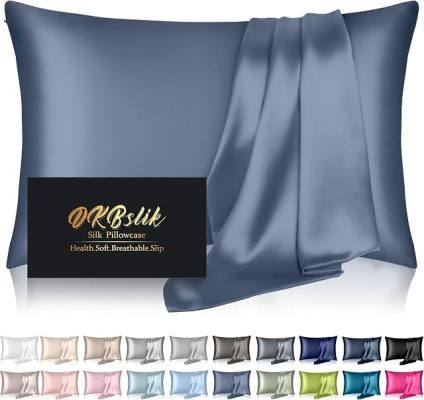
If the puffiness you are trying to fix is there when you wake up and gone by ten, the tool is not the lever. What you sleep on and how you sleep on it matters more than anything you do for four minutes in the morning. A cotton pillowcase pulls at the skin and holds heat against the cheek all night, which is the opposite of what you are trying to achieve with a cold roller. The silk pillowcase is the boring purchase that makes the morning version smaller, and the reasoning is set out in the silk pillowcase guide rather than repeated here.
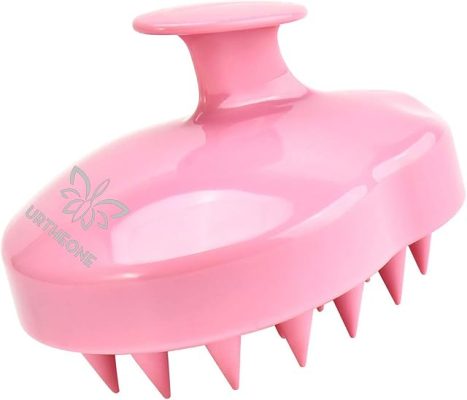
Second lever: how much you touch your face in the evening. A scalp massager is in this category only because it moves the habit — two minutes of something deliberate at the hairline replaces ten minutes of absent-minded face touching while you read.
What to buy first, in one line
Buy the cold one if your problem is heat and flushing, buy the stone if your problem is a heavy jaw in the morning, and buy neither if the problem is the pillow. Both are under the price of a single facial, which is the only comparison worth making: they are tools, not a service, and a tool only pays for itself if it is used on ordinary mornings rather than kept for occasions.
Helpful next: beauty and personal care, all buying guides, silk pillowcase: what it actually does. Prices, shipping and returns are whatever the Amazon listing shows at the moment you open it — nothing here is cached.
Which of the two would you actually use on a Tuesday morning — and which would end up in the drawer?
Products in this guide
The exact items referenced above. As an Amazon Associate we earn from qualifying purchases — details.
n
More buying guides
Products we would check first
Picked for this topic. Live price and availability are on the Amazon page — confirm there before you buy.
