
Pet Guides
Cat Water Fountains: Why Cats Refuse Them, and How to Get the Filter Right
Nov
Disclosure: this site earns a commission from qualifying purchases made through the links below, at no extra cost to you. See our affiliate disclosure.
Cats evolved to get most of their water from prey, which is why many of them drink far less than they should on dry food. Kidney and urinary disease are among the most common reasons a cat ends up at the vet, and low water intake is a contributing factor. A fountain is the standard fix. It also fails constantly, for predictable reasons.
Why cats refuse fountains
- Noise. A pump with a trickle that is audible at two metres reads as a hazard to a cat. This is the number one cause of refusal.
- Whisker contact. A narrow bowl forces the cat’s whiskers to touch the sides. That is genuine discomfort, not fussiness.
- Plastic taste. Some cats refuse plastic outright; stainless steel or ceramic solves it and also cleans better.
- Placement next to food. Cats instinctively avoid water near a food source. Move it a room away and refusal often stops.
What a good fountain looks like
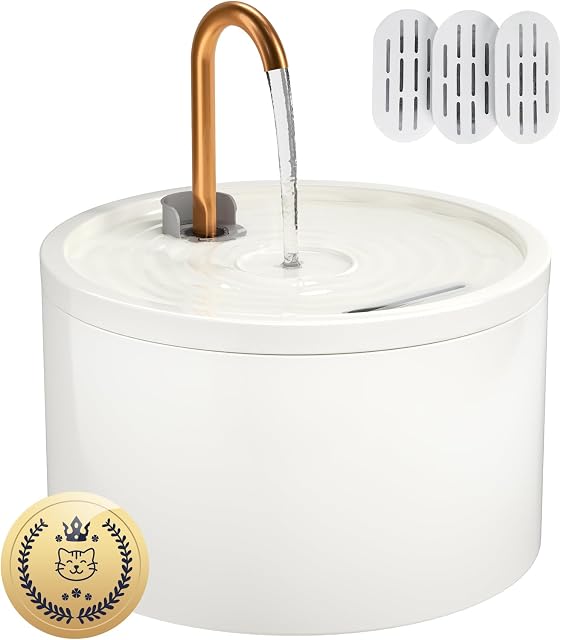
Wide drinking surface, stainless steel or ceramic where the tongue goes, pump on the lowest setting you can hear from 30cm, and a filter you can buy as a normal consumable. Our listing: Cat Water Fountain (Filtered, Quiet) (filtered, quiet, wide basin). If you want the stainless version specifically because your cat avoids plastic, see this filtered stainless fountain.
The filter is the part people get wrong
Most fountains ship with a carbon-plus-sponge cartridge. The sponge catches hair; the carbon does very little after about two weeks because it is saturated. Practical schedule:
- Rinse the sponge every 2-3 days – hair-loaded sponges slow the pump and make it louder, which is what causes refusal.
- Change the carbon cartridge every 2-4 weeks. Shake it first; a carbon cartridge that rattles is still working, one that is silent and heavy is spent.
- Full teardown and vinegar soak monthly. White vinegar, 20 minutes, then rinse. This removes the mineral film that makes the pump noisy.
Buy filters in a 6-12 pack at the same time as the fountain. A fountain with no spare filter becomes a static bowl within a month, which defeats the purchase.
Getting a suspicious cat to switch
Run the fountain for two days before you remove the old bowl, and place it where the cat already walks. Do not stand over it. If the cat is still refusing after a week, the usual culprits in order are: noise, proximity to food, and bowl width. Change one at a time.
Some cats only accept a running tap or a fountain with a very low flow, so start with the pump at minimum and raise it only if the cat ignores the water.
The real goal: total water intake
A fountain does not fix hydration on its own. Wet food does more, reliably. If your cat is on dry food only and drinks little, adding one wet meal a day beats any fountain. Use the fountain as the second lever, not the only one. And keep the water fresh – a fountain with stale water is just a moving bowl of stale water.
FAQ
Can I put it in the dishwasher? Pump and motor, never. Basin, usually yes if it is stainless.
Is a fountain safe with kittens? Yes, low flow, shallow basin, and check the cord routing.
My cat drinks from the tap, not the fountain. Why? Flow pattern and height. Try raising the fountain or lowering the flow to a thin stream.
Where to buy
Everything referenced above is listed in our store — we only link to products we would recommend at the stated use:
Disclosure: this site earns a commission from qualifying purchases made through the links below, at no extra cost to you. See our affiliate disclosure.
More buying guides
